The Miswak Stick: What Science Says About Nature's Toothbrush
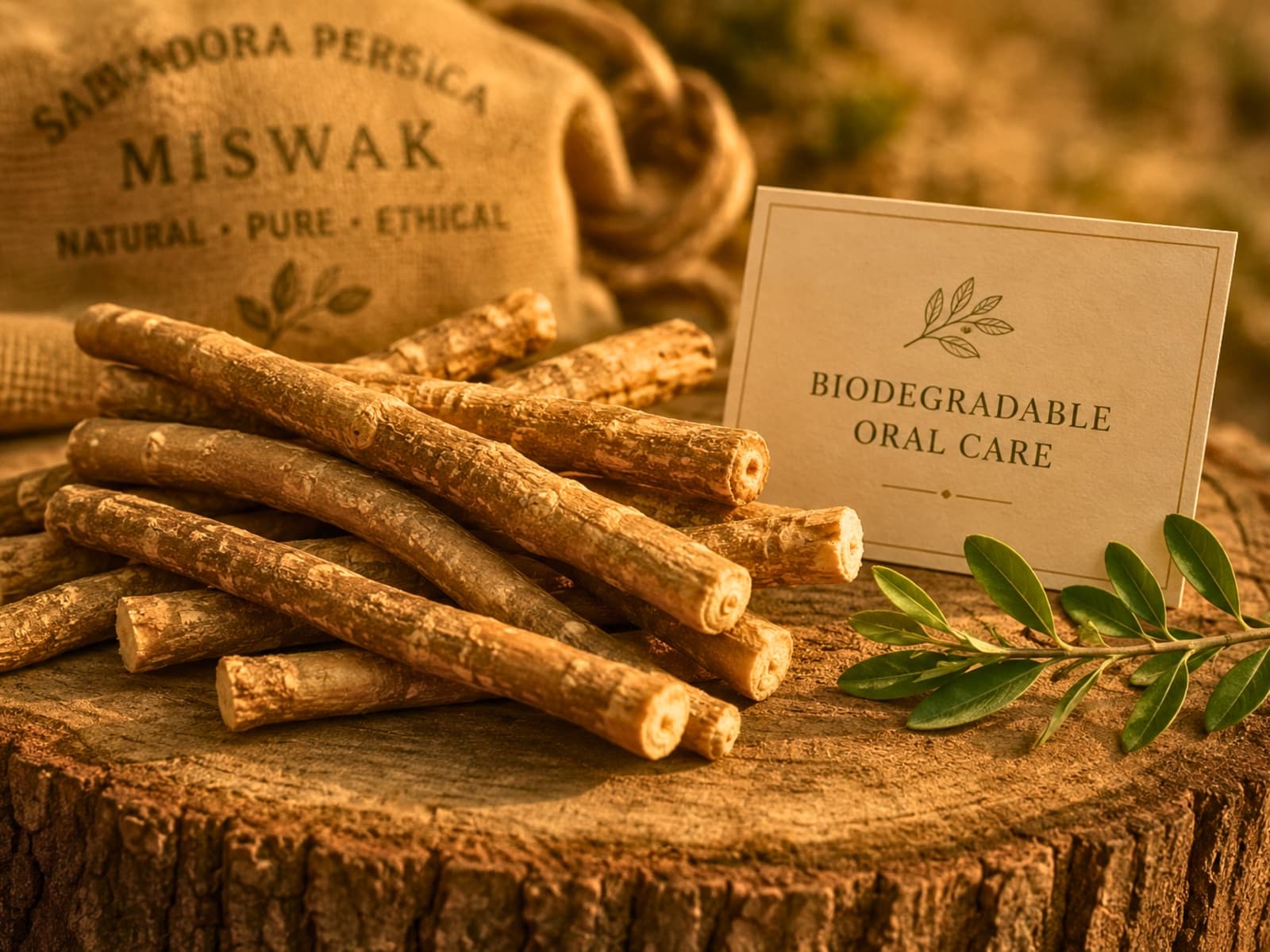
Long before nylon bristles and plastic handles, people cleaned their teeth with a stick. Not just any stick — the miswak (also called sewak or siwak), cut from the roots and branches of the Salvadora persica tree, has been used across the Middle East, Africa, and South Asia for thousands of years. It is one of the oldest oral hygiene tools known, with records of chewing sticks going back to ancient Babylonia.
What makes the miswak remarkable is that modern dental research has repeatedly taken it seriously — and found that this humble twig holds up. The World Health Organization has acknowledged the chewing stick as an effective tool for oral hygiene in its consensus reports on oral disease prevention, and encouraged further study of its use in communities where it is customary.
A Built-In Chemistry Set for Your Mouth
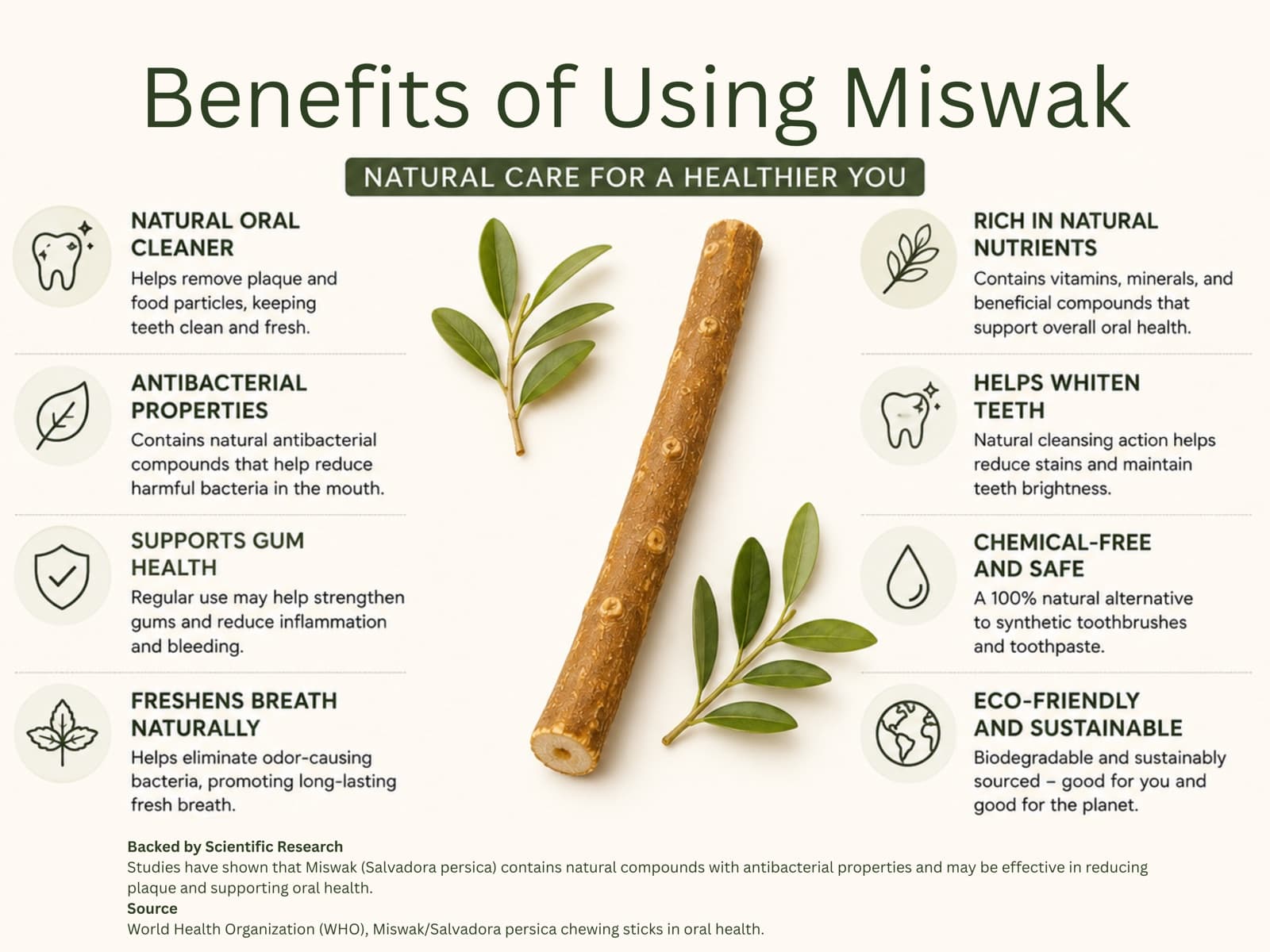
The miswak isn't effective just because of mechanical scrubbing. Laboratory analyses of Salvadora persica — summarized in a 2015 review in the Saudi Medical Journal by Haque and Alsareii — have identified a suite of naturally occurring compounds that are directly relevant to oral health. These include fluoride and calcium, which support tooth enamel; silica, a mild natural abrasive that helps lift surface stains; tannins, astringent compounds associated with reduced plaque formation; and vitamin C, which supports gum tissue health.
Perhaps most interesting is benzyl isothiocyanate. Researchers at the Karolinska Institute (Sofrata and colleagues, published in the Journal of Periodontology and PLoS ONE) found that this compound, released from miswak root, has a rapid bactericidal effect against several of the Gram-negative bacteria implicated in gum disease. In other words: the stick comes with its own antibacterial agent built in.
What Clinical Studies Actually Found
The strongest evidence comes from head-to-head comparisons with the conventional toothbrush. A frequently cited randomized clinical study by Al-Otaibi and colleagues, published in Oral Health & Preventive Dentistry (2003), compared miswak use with toothbrushing in adults accustomed to using it. The result: when used correctly, the miswak reduced dental plaque and gingival inflammation at least as effectively as a standard toothbrush — and in some measures, more effectively.
Population studies point the same way. Research by Darout and colleagues on adult miswak users in Sudan found their periodontal health was comparable to — and in some respects better than — that of toothbrush users. Reviews of the clinical literature consistently conclude that the miswak, used with proper technique, is an effective tool for plaque control and gum health. The honest caveat, which good reviews also note: technique matters a great deal, and the miswak cleans best when the softened brush tip is used deliberately on all tooth surfaces.
Antibacterial, Not Just Abrasive
Multiple laboratory studies have shown that Salvadora persica extracts inhibit Streptococcus mutans — the bacterium most responsible for tooth decay — as well as Lactobacillus species and several periodontal pathogens. This antibacterial action, combined with the mild fluoride content and the saliva stimulation that comes from chewing, is believed to explain why regular miswak users often show lower rates of caries in observational studies.
Fresh breath is a side benefit with a mechanism behind it: by reducing the load of odor-producing bacteria and stimulating saliva flow, the miswak addresses the two main causes of bad breath rather than masking them.
The Sustainability Case Is Just as Strong
Every year, billions of plastic toothbrushes are manufactured, used for a few months, and discarded — most ending up in landfills or oceans, where they persist for centuries. A miswak stick is the opposite: it is a root. It needs no plastic, no packaging beyond a simple wrapper, no factory. When it's spent, it biodegrades completely. One 8–10 inch stick, trimmed and refreshed as you go, typically lasts 2 to 3 months of daily use.
How to Use a Miswak
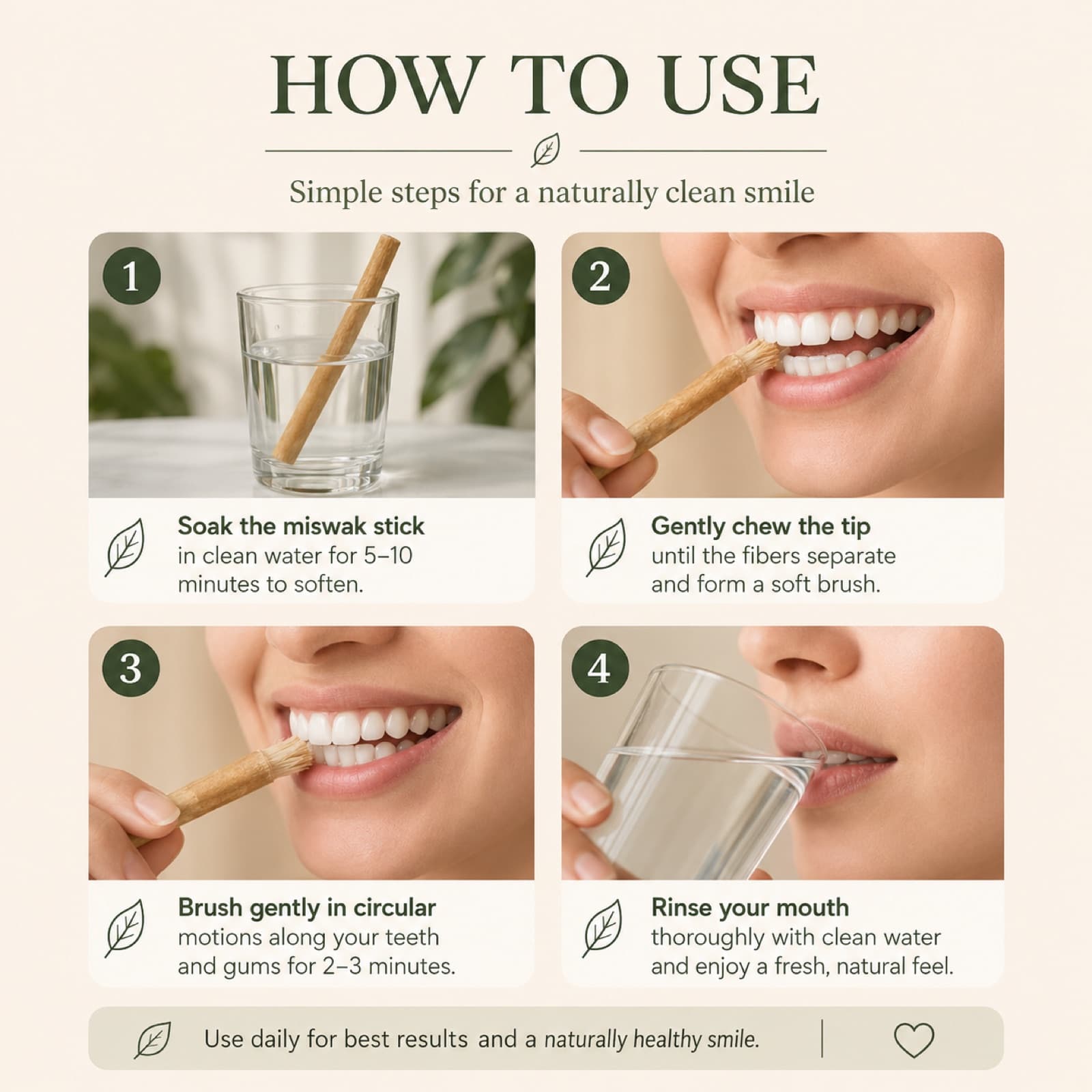
Using a miswak is simple. Soak the stick in clean water for a few minutes to soften it, then gently chew the tip until the fibers separate into a soft brush. Brush in gentle circular motions along your teeth and gums for two to three minutes, then rinse. Rinse the stick after use, store it somewhere dry, and trim the tip when the bristles splay or harden — a fresh brush is a few chews away.
One honest note from us: the miswak is a genuinely effective oral care tool, but it isn't a replacement for regular dental checkups, and many dental professionals recommend it alongside — rather than instead of — your normal routine. Used that way, it's a powerful, zero-waste addition to daily oral care.
Try Nature's Toothbrush Yourself
We're proud to offer 100% organic miswak sticks in our shop — sustainably sourced, free of additives, and individually vacuum-laminated so each stick arrives fresh, with no chance for mould to develop inside. Each stick is 8–10 inches long and available in three thicknesses (Thin, Medium, and Thick), at just $3 per stick.
Ready to make the switch? Order your organic miswak sticks today — shipped from Bangladesh to your door.
Shop Miswak SticksFive thousand years of tradition, confirmed by modern science — sometimes the most sustainable choice is also the oldest one.